

제품 이름
Chlorine Test, colorimetric, 0.1-2.0 mg/L (Cl2), for use with MQUANT®
product line
MQuant®
specific analyte(s)
chlorine
measuring range
0.1-2.0 mg/L (Cl2)
compatibility
for use with MQUANT®
detection method
colorimetric
storage temp.
15-25°C
Quality Level
Application
- Water Treatment and Disinfection: Chlorine testing is crucial for ensuring the safety and effectiveness of water disinfection processes. Accurate measurement of free chlorine and total chlorine levels is essential to maintain appropriate disinfection while minimizing the formation of harmful disinfection by-products (DBPs). Recent studies have focused on the kinetics of chlorine reactions in seawater and their impact on biocidal effectiveness and environmental safety (Kinani et al., Critical Reviews in Analytical Chemistry, 2022).
- Environmental Monitoring: Chlorine testing is used to monitor chlorine levels in various environmental matrices, such as rivers, lakes, and wastewater. This is essential to assess the impact of chlorination on aquatic ecosystems and to ensure compliance with environmental regulations. Advanced chromatographic and mass spectrometric techniques are employed to speciate chlorine-produced oxidants and their by-products in seawater (Roumiguières et al., Critical Reviews in Analytical Chemistry, 2023).
- Public Health and Drinking Water Safety: Ensuring the safety of drinking water is a primary concern. Chlorine testing helps to maintain the right balance of chlorine for effective pathogen control while avoiding excessive chlorination that could lead to health risks. Analytical methods, including titrimetric and colorimetric methods, are used to measure residual chlorine in drinking water to ensure it meets safety standards (Ko et al., Chinese Journal of Analytical Chemistry, 2022).
- Industrial Applications: Chlorine testing is essential in various industrial processes where chlorine is used, such as in the production of paper and textiles, and in cooling water systems. Accurate monitoring of chlorine levels helps in optimizing these processes and ensuring compliance with safety and environmental regulations (Kinani et al., Critical Reviews in Analytical Chemistry, 2022).
- Photochemical Degradation Studies: Chlorine testing is also used in research studies involving the photochemical degradation of pollutants. For example, the use of UV/free chlorine processes in degrading pharmaceuticals in aqueous solutions has been investigated using response surface methodology to optimize conditions for maximum efficiency (Arman et al., International Journal of Environmental Analytical Chemistry, 2022).
General description
The test can be used in
- Groundwater and surface water
- Drinking water and mineral water
- Waters from aquaculture
- Wastewater
- Electroplating wastewater
- Disinfectant solutions
This test is not suited for seawater.
Method
In weakly acidic solution free chlorine reacts with diethyl-p-phenylenediamine (DPD) to form a red-violet dye. In the presence of potassium iodide, also combined chlorine is measured in this reaction. The chlorine concentration is measured semiquantitatively by visual comparison of the color of the measurement solution with the color fields of a color disk.
The test evaluates the color reaction based on the transmitted light method. So even turbid and colored water samples can be analyzed without further preparation.
The color disk is made of very durable, lightfast plastic, thus suitable for industrial areas and wet environments.
Using the refill pack 1.14979 containing all the reagents, the original test kit can be used for a very long time, making it a particularly economical and ecological system.
Legal Information
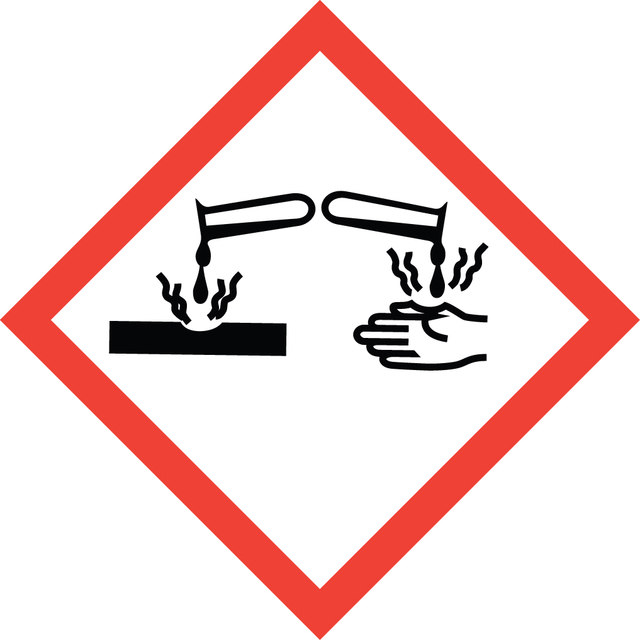
signalword
Danger
hcodes
Hazard Classifications
Eye Dam. 1 - Met. Corr. 1 - Skin Corr. 1A
저장 등급
8A - Combustible, corrosive hazardous materials
wgk
WGK 2
시험 성적서(COA)
제품의 로트/배치 번호를 입력하여 시험 성적서(COA)을 검색하십시오. 로트 및 배치 번호는 제품 라벨에 있는 ‘로트’ 또는 ‘배치’라는 용어 뒤에서 찾을 수 있습니다.
프로토콜
DIN EN ISO 7393에 따른 유리 Chlorine용 표준용액 조제
유리 Chlorine용 AQA 표준 - 유리 Chlorine용 표준용액 조제 - 유리 Chlorine용 저장용액 조제: 먼저 약 6 - 14% 활성 chlorine을 함유하는 sodium hypochlorite 용액을 이용하여 1:10 희석액을 조제합니다. 이를 위해 sodium hypochlorite 용액 10 ml를 피펫으로 보정 또는 적합성이 확인된 100 ml 정량 플라스크 안에 넣은 뒤 분석용 정제수를 표선까지 채웁니다.
유리 염소를 위한 AQA 표준 - 유리 chlorine용 표준용액 조제
Preparation of a standard solution for free Chlorine according to DIN EN ISO 7393
관련 콘텐츠
AQA Standard for free chlorine - Preparation of a standard solution for free chlorine
국제 무역 품목 번호
| SKU | GTIN |
|---|---|
| 1.14978.0001 | 04022536517834 |
자사의 과학자팀은 생명 과학, 재료 과학, 화학 합성, 크로마토그래피, 분석 및 기타 많은 영역을 포함한 모든 과학 분야에 경험이 있습니다..
고객지원팀으로 연락바랍니다.